
Forest Euphoria: The Abounding Queerness of Nature by Patricia Ononiwu Kaishian (non-fiction)
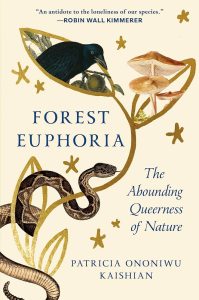
The line between humans and nature is beautifully blurred in Patricia Ononiwu Kaishian’s Forest Euphoria: The Abounding Queerness of Nature. Kaishian’s training as a mycologist and her lifelong connection to the outdoors culminate in a voice that compels the reader to view nature and oneself in all of our variable and dynamic ways. With scientific evidence and personal anecdotes, Kaishian explores the non-conforming essence of nature, including non-heteronormativity and the nuances of sex in biology. The behaviors of fungi, plants, and animals are often studied through the lenses of evolution and adaptations, but among humans, these conversations and perspectives are less cut-and-dried. By pairing these real-world examples with discussion of the way humans view these concepts in the context of our society, readers are left with the provocative questions: what is natural, and who or what gets to decide that it is so? This book levels the playing field between humans and the other life forms that inhabit our planet—nature decides what is natural, and nature doesn’t require any explanation.
The Occasional Human Sacrifice: Medical Experimentation and the Price of Saying No by Carl Elliott (non-fiction)
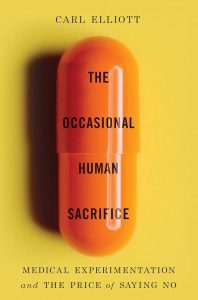
Our current world is constantly throwing moral quandaries our way: what is right and what is wrong? In science and medicine, this question often comes up in the context of experimental design, choosing a model for a study, and risk assessment. Though efforts towards transparency, maximizing benefits, and minimizing harm have increased over the years, we still must reckon with a dark past where these moral standards were not the norm, causing irreparable damage. In Carl Elliott’s The Occasional Human Sacrifice: Medical Experimentation and the Price of Saying No, we are offered the unique perspectives of the whistleblowers responsible for bringing research misconduct to the forefront. We are exposed to research atrocities, some familiar to many, some unfamiliar to most, and the lengths to which power structures within science will go to avoid disrupting the status quo. Elliott explores the grim price of morality through conversations with whistleblowers who were punished and ostracized for their courage to stand up for what is right. These accounts offer insight into the structural preservation of systemic mistreatment and endangerment of vulnerable populations, provoking us to think about how our actions as scientists might uphold or dismantle this structure.
The Gone World by Tom Sweterlitsch (fiction)
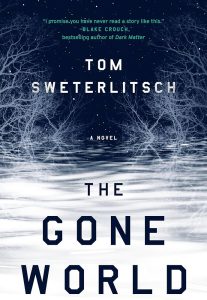
Immerse yourself in an alternate world where criminal investigations require frequent visits to future timelines to uncover the truth behind the present. The Gone World is a cerebral science fiction novel that follows a young investigator tasked with investigating a major crime involving a fictionalized, space-focused U.S. Navy group. The crime, an act of violence by a Navy man on his family, serves as a small peek into a scientific plot that is ushering in the literal end of the world. The butterfly effect is at the forefront of the text, as each trip to the future does not show what will be, but rather what could be. Any small change in the present can incite a new future timeline. The only guaranteed outcome? The apocalypse. As our main investigator explores multiple timelines, we explore themes of unrestricted power, reality, the potentially drastic effects of scientific and technological advancements, and, ultimately, fate. How much of our future is really within our control?